
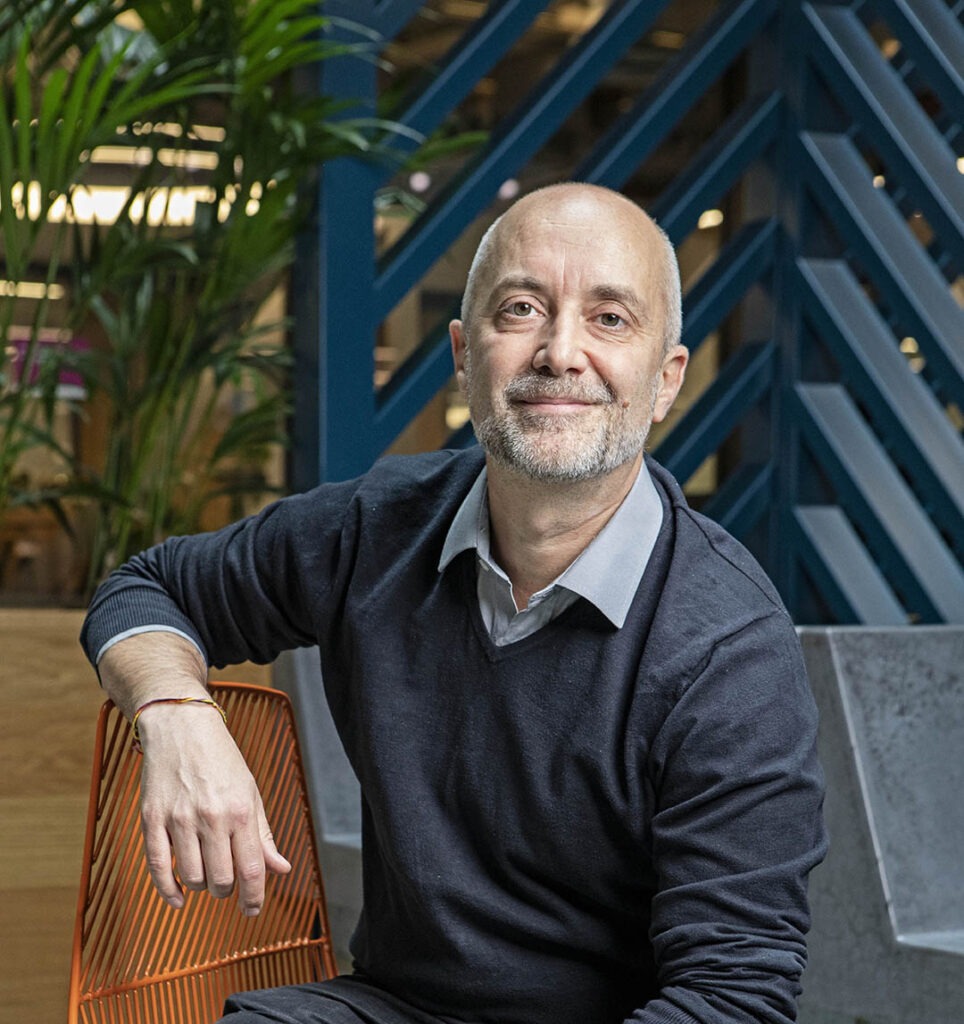
Today we interview François Devy, CEO of one of our standout startups, SEAQUAL INITIATIVE, dedicated to consolidating the recovery of plastics from rivers and oceans to convert them into new products (textile, automotive).
What problem does your startup address and what solution does it propose?
SEAQUAL INITIATIVE addresses the serious problem of plastic pollution in the oceans. Every year, millions of tons of plastic waste end up in the seas, affecting marine life, human health, and global ecosystems. Our solution is to transform this waste into a valuable resource.
Through collaboration with fishermen, NGOs, and other entities, we collect marine plastics and convert them into SEAQUAL® YARN, a high-quality yarn used in the textile industry.
This approach not only helps clean the oceans but also promotes a circular and sustainable economy, creating recycled products that reduce the dependence on virgin plastics.
How and why did you start this entrepreneurial adventure? Any advice from your experience that you would like to share with future entrepreneurs?
We started SEAQUAL INITIATIVE driven by the urgency to find innovative and sustainable solutions to the problem of marine pollution. Seeing the magnitude of the challenge, we wanted to turn it into an opportunity to generate a positive impact.
Our experience has taught us the importance of collaboration and perseverance. We advise future entrepreneurs to find a clear purpose that they are passionate about and to seek strategic partnerships.
Additionally, it is crucial to prioritize solving clear and specific problems. Identifying and focusing on a tangible problem allows for the development of more effective and measurable solutions, which facilitates the path to success. The path of entrepreneurship is demanding, but with a meaningful mission and the right support, obstacles can be overcome more easily.
How do you expect the sector to evolve? And what are your expectations for your startup?
We expect the sustainability and circular economy sector to continue growing rapidly, driven by increased environmental awareness and the demand from responsible consumers. We foresee a rise in technological innovations and collaborative initiatives that address plastic pollution.
For SEAQUAL INITIATIVE, our expectations are to expand our network of collaborators and increase the amount of marine plastics collected and recycled. We aspire to be a global benchmark in the fight against marine pollution, promoting sustainable practices and innovative solutions that involve the entire value chain, from waste collection to the manufacturing of final products.
Any upcoming news that you would like to share with the rest of the startups?
In the near future, we are excited to announce several innovative initiatives. Firstly, we will launch new collections of products made with SEAQUAL® YARN, in collaboration with leading brands in sustainable fashion. Additionally, we are improving our existing product SEAQUAL® YARN, optimizing its quality and sustainability. We will also introduce new recycled materials, such as polypropylene (PP) and polyamide 6 (PA6), expanding our solutions for various applications.
We are developing new products, such as advanced fibers, to offer more solutions to various sectors, including furniture, automotive, and fashion. These innovations will allow industries to integrate high-quality recycled materials into their products, fostering sustainability throughout their value chains.
Moreover, we plan to expand our environmental awareness and education activities, involving communities and young people in the fight against marine pollution.
We invite other startups to join us in collaborative projects to maximize the positive impact on the environment, leveraging synergies and sharing knowledge to move towards a more sustainable future.
In which areas would you like to collaborate with other startups, companies, or organisations?
We would like to collaborate in areas such as technological innovation, research and development of new sustainable materials, and the expansion of the circular economy. We are open to partnerships with tech startups that develop tools for the collection and recycling of plastics, as well as with companies that seek to integrate recycled materials into their products. Additionally, we value collaborations with NGOs and government agencies to amplify our awareness and environmental education initiatives.
We are also collaborating with large companies to accelerate the integration of our solutions in various industrial sectors, including furniture, automotive, and fashion. These strategic alliances are key to expanding our impact and facilitating the adoption of recycled materials in diverse industrial applications.
We firmly believe that by working together, we can achieve significant change in the fight against marine pollution and move towards a more sustainable future.